


Introduction
The Indian stock market plays an important role in the country’s financial development, attracting individual investors, institutional participants and businesses. Among the various market indicators, the Nifty 50 is one of the most widely followed benchmarks for understanding the overall direction of Indian equities. It represents the performance of 50 major companies listed on the National Stock Exchange (NSE) and provides valuable insights into market sentiment, economic expectations and corporate performance. Investors regularly monitor the Nifty share price to understand whether the market is moving upward, experiencing a correction or entering a period of uncertainty.
Market conditions in November 2026 reflect the influence of several domestic and international developments. Global technology market volatility, crude oil movements, foreign investment activity, interest rate expectations and corporate earnings are contributing to changing investor sentiment. On November 6, Indian benchmark indices showed resilience despite weakness across several Asian technology markets. Reuters reported that the Nifty 50 gained approximately 0.51% during Friday’s trading session, supported by improving sentiment and foreign investor purchases. However, the broader market continued to show mixed performance, highlighting the importance of looking beyond headline index movements.
Understanding the factors behind market changes can help investors make more informed financial decisions. Instead of focusing only on daily fluctuations, it is useful to examine economic conditions, company earnings, sector movements and long-term market fundamentals. This article explains how the index works, what influences its movements and which developments investors should monitor in the current market environment.
What Is the Nifty 50 and Why Does It Matter?
The Nifty 50 is the flagship stock market index of the National Stock Exchange of India. It consists of 50 leading companies representing different sectors of the Indian economy, including banking, information technology, automobiles, energy, healthcare, consumer goods and financial services. Because these businesses operate across important economic activities, their combined performance offers a broad picture of the Indian equity market.
The index is managed by NSE Indices Limited and calculated using the free-float market capitalisation methodology. Under this approach, companies receive different weightages according to their available market capitalisation. Businesses with larger free-float market values generally have a greater influence on the index than smaller constituents. According to NSE Indices, the Nifty 50 represented approximately 49% of the free-float market capitalisation of NSE-listed stocks as of September 30, 2026. This demonstrates its importance as a benchmark for understanding the country’s listed equity market.
Investors, mutual fund managers and financial institutions use the index for different purposes. Some compare their investment portfolio returns against its performance, while others use index funds and exchange-traded funds to obtain diversified exposure to leading Indian companies. Traders also monitor Nifty futures and options to understand market expectations and manage risk.
Understanding the Latest Market Scenario in November 2026
The Indian equity market has experienced changing conditions throughout 2026. Global uncertainty, elevated crude oil prices, currency movements and foreign investment trends have influenced investor confidence. During October, benchmark indices recorded a recovery of approximately 7%, although they remained under pressure on a year-to-date basis, according to Reuters’ November 6 market coverage.
November has started with a combination of positive and negative developments. On November 5, Indian markets witnessed a strong recovery following a decline in crude oil prices and substantial foreign institutional investor purchases. Reuters reported that foreign investors bought approximately ₹15,000 crore worth of shares on Thursday, marking their largest single-day net purchase in nearly six years.
On November 6, Indian equities continued to show resilience despite significant declines in certain international markets. Information technology shares and private banking stocks supported sentiment, while several mid-cap and small-cap stocks experienced weakness. This difference between large-cap and broader-market performance indicates that investors are becoming more selective about where they allocate capital.
The latest Nifty share price movements should therefore be understood in the context of broader market conditions rather than as an isolated number. A rising benchmark does not necessarily mean every listed company is performing well. Similarly, a temporary decline does not automatically indicate that the long-term investment outlook has weakened.
Major Factors That Influence Nifty Market Movements
1. Domestic Economic Growth
India’s economic growth is an important factor influencing the performance of its stock market. Strong economic activity can increase demand for products and services, improve company revenues and encourage businesses to expand their operations. Industries such as banking, automobiles, infrastructure, consumer goods and manufacturing can benefit when economic conditions remain supportive.
Government expenditure on infrastructure, private investment, industrial development and domestic consumption also contribute to market expectations. When businesses report stronger sales and profitability, investors may become more confident about future earnings. However, economic growth alone does not guarantee rising share prices because valuations and market expectations also matter.
2. Foreign Institutional Investor Activity
Foreign institutional investors play an important role in Indian financial markets. Their investment decisions can influence demand for large-cap shares and contribute to changes in overall market liquidity. When foreign investors purchase Indian equities, buying pressure may support benchmark indices. On the other hand, substantial selling can create downward pressure.
In 2026, foreign investment activity has been affected by international interest rates, currency movements, geopolitical developments and changing investment preferences. The significant foreign purchases reported in early November have provided support to market sentiment. Nevertheless, investors should examine the consistency of these inflows instead of assuming that one strong trading session represents a permanent change in market direction.
3. Crude Oil Prices
Crude oil is another important factor because India depends considerably on imported petroleum products. Higher international oil prices can increase transportation expenses, manufacturing costs and inflationary pressure. They may also affect the country’s import bill and currency stability.
Lower crude oil prices can provide relief to several industries, particularly aviation, paints, chemicals, transportation and oil-consuming manufacturing businesses. However, the benefits may vary depending on individual company operations and pricing strategies.
The November 2026 market recovery has partly reflected improving sentiment following a decline in oil prices. Investors are therefore paying close attention to international energy markets when evaluating the direction of Indian equities.
4. Interest Rates and Inflation
Interest rates influence borrowing costs, consumer spending, business expansion and investment decisions. When borrowing becomes expensive, companies may postpone expansion plans, while consumers may reduce spending on loans and other credit-based purchases.
Inflation also affects the purchasing power of households and the operating expenses of businesses. If inflation remains elevated, central banks may maintain tighter monetary conditions to control price increases. Such conditions can influence equity valuations because investors reassess the future profitability of businesses.
5. Corporate Earnings and Business Performance
Corporate earnings are among the most important long-term drivers of stock market performance. Investors generally prefer companies that demonstrate consistent revenue growth, manageable debt, healthy profit margins and strong cash flow.
The September and October 2026 market outlook reports highlighted improving earnings conditions across several Indian sectors. However, companies may experience different results depending on their industries, operating costs and competitive positions.
| Market factor | Possible positive influence | Possible negative influence |
|---|---|---|
| Economic growth | Higher demand and business expansion | Slower consumption and investment |
| Foreign investment | Increased market liquidity | Selling pressure and volatility |
| Crude oil prices | Lower input and transportation costs | Higher inflation and expenses |
| Interest rates | Lower borrowing costs | Expensive loans and reduced spending |
| Corporate earnings | Better profitability and valuations | Weak results and lower expectations |
| Currency movements | Improved export competitiveness in some sectors | Higher import costs |
Which Sectors Have the Greatest Influence on the Nifty 50?
The Nifty 50 includes businesses from several important industries. However, their influence is not equal because index weightages depend on free-float market capitalisation. Consequently, movements in large banking, financial services, information technology and energy companies can have a noticeable impact on the benchmark.
Banking and Financial Services
Banking and financial services are important components of the Indian stock market. Major private and public sector banks influence index performance through their market capitalisation and financial results. Factors such as loan growth, deposit mobilisation, interest margins, asset quality and credit demand can influence their valuations.
A healthy banking environment generally supports economic activity because businesses and households depend on credit for different financial requirements. However, increasing bad loans, declining margins or slower deposit growth may create pressure on banking shares.
Information Technology
India’s information technology industry has an important position in the country’s economy. Major IT companies provide software development, consulting, cloud services, cybersecurity and digital transformation solutions to domestic and international clients.
The sector is influenced by global technology spending, currency movements, international economic growth and demand for digital services. Developments in artificial intelligence can create new business opportunities, although changing technology budgets and competition may also affect profitability.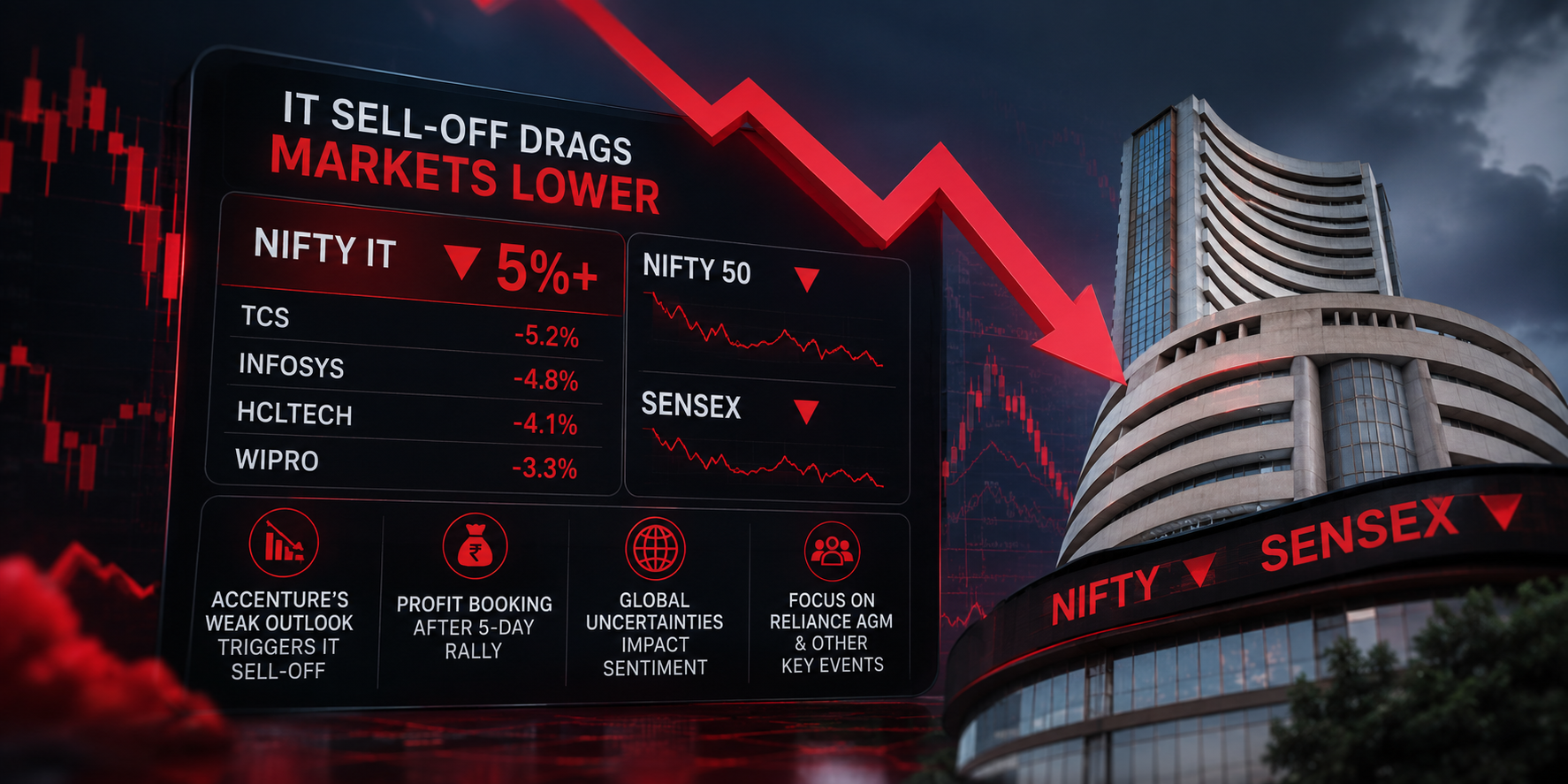
Automobile and Manufacturing
The automobile and manufacturing industries reflect domestic consumption, industrial activity and investment demand. Vehicle sales, production costs, commodity prices and financing conditions can influence company performance.
Electric vehicles, automation, advanced manufacturing and infrastructure development are also creating opportunities for businesses operating in these industries. Nevertheless, investors should evaluate individual companies rather than assuming that every business will benefit equally.
Energy and Infrastructure
Energy and infrastructure companies are closely connected with economic development. Government investment, electricity demand, renewable energy projects, transportation development and industrial expansion can influence their growth prospects.
Changes in global energy prices, government policies and capital expenditure requirements may create opportunities as well as risks. These factors make the sector important when evaluating broader market conditions.
How Investors Can Analyse Market Performance
Understanding market movements requires more than checking whether the index has gained or lost points during a particular session. Investors should combine technical indicators, fundamental information and economic developments to develop a balanced view.
Technical analysis helps investors examine historical price movements, trading volume, support levels, resistance levels and market momentum. Moving averages can provide information about short-term and long-term trends, while the Relative Strength Index (RSI) is commonly used to assess momentum conditions.
Fundamental analysis focuses on the financial performance of companies and the broader economy. Investors may examine earnings growth, valuation ratios, debt levels, return on equity and cash flow before evaluating investment opportunities.
The Nifty share price can also be compared with other benchmarks, such as the Nifty Bank, Nifty Next 50 and Nifty Midcap indices. Such comparisons help investors understand whether market strength is concentrated in large companies or supported by broader participation.
A balanced analysis generally includes the following considerations:
- Price movements: Examine daily, weekly and monthly changes instead of relying on a single trading session.
- Trading volume: Consider whether market movements are supported by meaningful trading activity.
- Economic indicators: Monitor inflation, interest rates, GDP growth and industrial activity.
- Company earnings: Evaluate profitability, revenue growth and future business expectations.
Long-Term Investment Perspective and Market Opportunities
Long-term investors generally focus on the ability of businesses to generate sustainable earnings rather than reacting to every short-term market movement. India’s economic development, growing consumption, infrastructure investment, financial inclusion and digital transformation may create opportunities for companies across different sectors.
Index-based investment products can offer exposure to a diversified group of large companies without requiring investors to select every constituent individually. Index mutual funds and exchange-traded funds are commonly used for this purpose. However, these products still carry market risk because their value changes with the underlying index.
The Nifty share price can experience corrections even when the long-term economic outlook remains positive. This happens because markets continuously adjust to new information, changing expectations and investor behaviour. For example, an increase in interest rates may temporarily affect valuations even if corporate earnings remain healthy.
Investors should consider their financial objectives, investment horizon and risk tolerance before choosing an investment approach. A diversified portfolio can help reduce dependence on one company or industry, although diversification cannot eliminate market risk.
What Should Investors Watch in the Coming Months?
The remaining months of 2026 may bring opportunities as well as uncertainty for Indian equities. Several developments could influence the market’s direction, including corporate earnings announcements, international interest rate decisions, crude oil prices and foreign investment flows.
One important factor will be whether the improvement in foreign investor participation continues. Sustained purchases could provide support to large-cap stocks, particularly when domestic institutional investment remains healthy. However, renewed international uncertainty could change investment flows quickly.
Corporate earnings will also remain important. Investors will want to understand whether businesses can maintain revenue growth and profitability despite changing input costs and global economic conditions. Companies with strong balance sheets and consistent operating performance may attract greater attention.
Another important development will be domestic inflation and monetary policy. Changes in borrowing costs can influence consumption, housing demand, corporate investment and financial sector performance. Therefore, market participants will continue to monitor economic announcements and central bank decisions.
Rather than making predictions based on a single indicator, investors should evaluate several factors together. Market direction is influenced by the combined effect of economic growth, earnings, liquidity, valuations and global sentiment.
Common Mistakes to Avoid When Following the Stock Market
Many new investors focus heavily on daily market movements without understanding the reasons behind them. This can lead to unnecessary trading decisions and unrealistic expectations. A short-term market rally does not guarantee that prices will continue rising, just as a temporary correction does not automatically indicate a long-term decline.
Another common mistake is following market rumours or making decisions based on unverified information. Financial decisions should be based on reliable data, company disclosures and a clear understanding of investment risks.
Investors should also avoid concentrating their entire portfolio in one sector or security. Market conditions can change unexpectedly, and businesses may face operational challenges even when their industries are performing well.
Finally, leveraged trading requires particular caution. Futures and options can involve substantial losses, especially when traders do not understand margin requirements, volatility and contract expiry. A disciplined approach is generally more useful than attempting to predict every short-term market movement.
Conclusion
The Indian equity market continues to reflect a combination of domestic economic developments and international financial conditions. The Nifty 50 remains an important benchmark for understanding the performance of leading Indian companies and assessing broader investor sentiment. Recent November 2026 developments, including improving foreign investment activity, changes in crude oil prices and mixed global market performance, demonstrate how quickly market conditions can evolve.
Following the Nifty share price can help investors understand market direction, but meaningful analysis requires examining corporate earnings, economic indicators, sector performance, interest rates and valuation levels together. Investors should avoid relying entirely on daily price movements or unverified market predictions.
India’s long-term economic development offers potential opportunities for businesses across multiple industries. However, market risks, global uncertainty and changing financial conditions will continue to influence investment outcomes. A research-based approach, sensible diversification and disciplined risk management can help investors make more informed decisions while navigating the changing Indian stock market.