
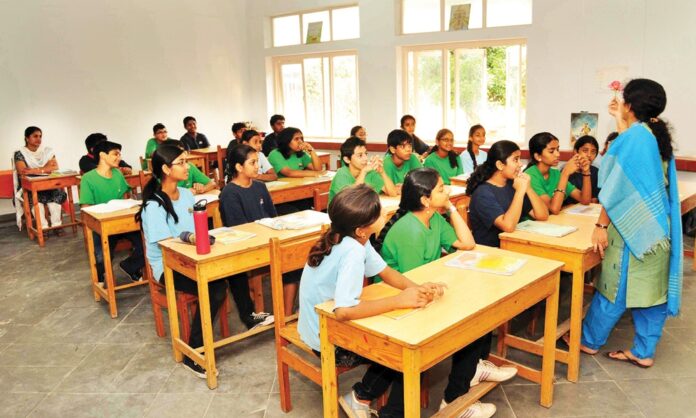

School education is one of the most important foundations for personal development, social progress, and economic growth. It provides children with the knowledge, skills, values, and confidence they need to understand the world around them. From learning basic reading, writing, and mathematics to developing critical thinking and communication abilities, schools play a significant role in shaping a student’s future. Education also encourages curiosity, creativity, discipline, and cooperation, helping children become responsible members of society.
In today’s rapidly changing world, education involves much more than memorizing facts and preparing for examinations. Students need opportunities to explore new ideas, solve problems, work in teams, and apply their knowledge to real-life situations. Teachers, parents, school administrators, and policymakers all contribute to creating an environment where every child can learn effectively. A strong educational foundation can open doors to higher studies, employment, entrepreneurship, and lifelong learning while helping individuals make informed decisions throughout their lives.
What Is School Education?
School education refers to the organized learning that children receive through educational institutions during their formative years. It generally includes foundational learning, primary education, middle or upper-primary education, and secondary or senior-secondary education, depending on the country’s educational structure. Each stage introduces age-appropriate subjects and activities that gradually increase students’ knowledge and abilities.
The purpose of education is not limited to academic achievement. Schools also help students understand social responsibilities, develop emotional awareness, respect different perspectives, and build healthy relationships. Through classroom lessons, sports, cultural activities, science experiments, and collaborative projects, learners discover their interests and strengths. These experiences support their intellectual, physical, emotional, and social development.
A well-planned educational system recognizes that every student learns differently. Some children understand concepts through visual examples, while others benefit from discussions, practical demonstrations, or individual guidance. By offering varied teaching methods and a supportive learning environment, schools can help students participate actively and make meaningful progress.
Importance of School Education in Modern Society
Education contributes to individual growth and the development of communities. Children who receive quality instruction have better opportunities to acquire literacy, numeracy, scientific understanding, and essential life skills. These abilities help them access further education, understand public information, and participate more confidently in society. Schools can also introduce students to subjects and careers they might not otherwise encounter.
Another important benefit is the development of social awareness. Students learn about cultural diversity, environmental protection, equality, citizenship, and cooperation. Classroom discussions and group activities teach them to listen to others, express opinions respectfully, and resolve disagreements constructively. Such experiences are valuable in a world where people from different backgrounds regularly interact.
Quality education can also contribute to reducing inequality by giving children from different economic and social backgrounds opportunities to develop their potential. However, equal access alone is not enough. Students also need trained teachers, safe classrooms, appropriate learning materials, inclusive facilities, and support when they experience difficulties. When these elements work together, schools become important spaces for building a more knowledgeable, capable, and inclusive society.
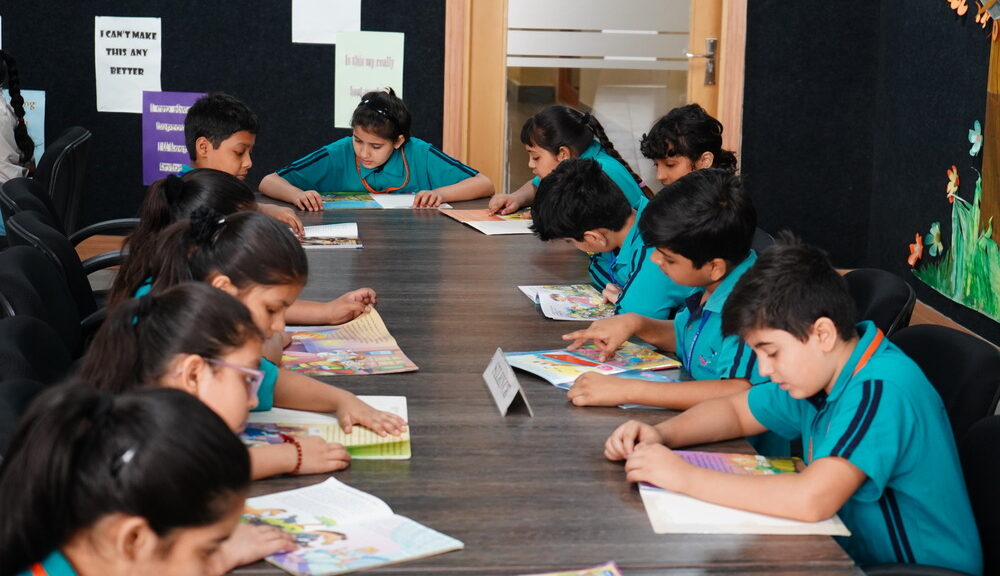
Major Stages of School Education
Educational systems organize learning into different stages to match children’s developmental needs. Although the exact structure varies by country and curriculum, each stage generally prepares learners for the next level.
1. Foundational and Early Learning
Early learning introduces children to language, numbers, shapes, stories, movement, and social interaction. Play-based activities help young learners develop curiosity, listening skills, coordination, and confidence. Teachers use songs, games, storytelling, pictures, and hands-on exercises to make learning enjoyable and accessible.
2. Primary Education
Primary education builds essential literacy and numeracy skills. Students learn to read with understanding, write clearly, perform mathematical calculations, and explore basic concepts in science and social studies. This stage also encourages regular study habits, classroom participation, and cooperation with classmates.
3. Middle or Upper-Primary Education
At this stage, students explore subjects in greater depth and begin connecting ideas across different disciplines. They develop analytical thinking, research skills, independent learning habits, and stronger communication abilities. Practical assignments and collaborative projects can help them understand how academic concepts relate to everyday life.
4. Secondary Education
Secondary education prepares students for advanced learning, vocational pathways, and future employment. Depending on the curriculum, learners may study a wider range of academic subjects or begin selecting areas of specialization. Career awareness, digital literacy, financial understanding, and problem-solving become increasingly valuable during these years.
Key Benefits of School Education
Schooling provides several benefits that extend beyond classroom performance. Academic learning helps students understand important concepts, while extracurricular activities encourage them to discover talents and interests. Regular interaction with teachers and peers also supports confidence, communication, and emotional development.
The following are some major benefits:
- Academic development: Builds knowledge in languages, mathematics, science, humanities, and other subjects.
- Critical thinking: Encourages students to evaluate information, ask questions, and make reasoned decisions.
- Communication skills: Improves speaking, listening, reading, writing, and presentation abilities.
- Social development: Teaches teamwork, cooperation, empathy, and respect for others.
- Personal discipline: Develops responsibility, time management, organization, and consistency.
- Career preparation: Introduces students to different occupations, professional skills, and further study options.
- Digital awareness: Helps learners use technology responsibly and evaluate online information.
- Civic responsibility: Builds awareness of rights, duties, community participation, and environmental concerns.
These benefits depend on the quality of learning experiences and the support available to each child. Schools that encourage questions, provide constructive feedback, and recognize different abilities can help students develop confidence alongside academic knowledge.
Important Subjects Taught in Schools
School curricula generally combine core academic subjects with creative, physical, and practical learning. The balance differs according to age, educational board, and national requirements.
| Subject | Main Learning Objectives |
|---|---|
| Languages | Reading, writing, speaking, and comprehension |
| Mathematics | Calculation, logical reasoning, and problem-solving |
| Science | Observation, experimentation, and scientific understanding |
| Social Studies | History, geography, citizenship, and society |
| Computer Education | Digital literacy, technology use, and computational thinking |
| Arts and Music | Creativity, expression, and cultural appreciation |
| Physical Education | Fitness, coordination, teamwork, and healthy habits |
| Environmental Education | Sustainability, conservation, and ecological awareness |
A balanced curriculum gives students opportunities to explore different interests rather than concentrating exclusively on examination results. Academic subjects establish important foundations, while arts, sports, and practical activities help learners develop creativity, confidence, and collaboration. Schools can strengthen this balance by connecting classroom topics with experiments, community projects, presentations, and everyday experiences.
Role of Teachers in Student Development
Teachers are central to the educational experience because they explain concepts, guide learning, assess progress, and support students through challenges. An effective teacher does more than deliver information. They encourage curiosity, identify learning gaps, provide constructive feedback, and create a classroom environment in which students feel comfortable asking questions.
Different students may need different forms of support. Some benefit from additional practice, while others need more challenging assignments to remain engaged. Teachers can use discussions, demonstrations, group work, quizzes, and individualized guidance to respond to these differences. Regular communication with families can also help educators understand students’ needs and identify problems before they become more serious.
Professional development is equally important. Teachers need opportunities to strengthen subject knowledge, explore effective teaching methods, and learn how to use educational technology appropriately. When schools invest in teacher training and provide manageable workloads, educators are better positioned to deliver meaningful lessons and build positive relationships with learners.
Technology and the Future of School Education
Technology is changing how students access information, practise skills, and communicate with teachers. Digital classrooms, educational applications, online assignments, virtual laboratories, and interactive learning resources can make certain concepts easier to understand. Students may also use technology to research topics, create presentations, collaborate on projects, and receive timely feedback.
However, technology works best when it supports clear educational goals. Providing devices alone does not guarantee better learning outcomes. Schools must consider internet access, teacher training, accessibility, student privacy, cybersecurity, and the reliability of digital content. Excessive screen time and distractions also need thoughtful management.
Artificial intelligence and adaptive learning platforms may offer additional ways to personalize instruction, generate practice activities, and help teachers identify areas where students need support. Nevertheless, students still require human guidance, meaningful discussion, practical experience, and opportunities to develop independent judgment. Digital tools should complement teachers rather than replace the relationships and professional decisions that are essential to effective education.
Common Challenges in School Education
Despite improvements in educational access, many schools continue to face difficulties that affect student learning. These challenges vary across regions and communities, making it important to develop solutions that reflect local needs.
Some common challenges include:
- Unequal access: Children in disadvantaged communities may lack nearby schools, transportation, learning materials, or reliable internet access.
- Teacher shortages: Some institutions struggle to recruit and retain qualified teachers.
- Learning gaps: Students may move between grades without fully mastering essential skills.
- Financial barriers: School expenses, uniforms, transport, and other costs can place pressure on families.
- Outdated teaching practices: Excessive reliance on memorization may limit creativity and deeper understanding.
- Student well-being: Bullying, stress, social pressure, and learning difficulties can affect participation and performance.
- Infrastructure limitations: Inadequate classrooms, sanitation, electricity, libraries, or accessible facilities can create barriers to learning.
Addressing these challenges requires cooperation between governments, schools, families, and communities. Investment in infrastructure, teacher development, inclusive education, student support services, and appropriate learning resources can make a meaningful difference. Schools should also monitor attendance and learning progress to identify students who need additional assistance.

How to Improve the Quality of School Education
Improving educational quality requires a comprehensive approach that considers both academic outcomes and student well-being. Schools need clear learning objectives, capable teachers, relevant curricula, safe facilities, and reliable ways to measure progress. Instead of focusing only on final examinations, assessment should help educators understand what students have learned and which concepts require further explanation.
Practical learning is another important area for improvement. Science experiments, reading activities, debates, educational visits, arts, sports, and community projects allow students to apply their knowledge. Such experiences can improve engagement and help learners connect theoretical ideas with real-world situations.
Parents can contribute by encouraging regular reading, maintaining communication with teachers, supporting healthy routines, and discussing children’s progress without placing excessive pressure on them. Schools can strengthen these efforts through parent meetings, mentoring, counselling, and additional academic support.
Important improvement strategies include:
- Provide continuous professional development for teachers.
- Encourage interactive and student-centred teaching methods.
- Ensure access to textbooks, libraries, laboratories, and suitable technology.
- Identify learning difficulties early and offer targeted assistance.
- Promote inclusive classrooms that respect different abilities and backgrounds.
- Assess understanding through projects, classroom activities, and regular feedback.
- Support physical health, emotional well-being, and extracurricular participation.
Consistent implementation of these measures can help create a more effective, supportive, and engaging learning environment.
School Education in India
In India, school education includes institutions following different state boards, central boards, and other recognized educational frameworks. The National Education Policy 2020 promotes a broader approach to learning, with attention to foundational literacy and numeracy, conceptual understanding, flexibility, and the development of practical skills. Its proposed curricular structure is commonly described through the 5+3+3+4 design, covering different developmental stages from early childhood through secondary education.
The Right of Children to Free and Compulsory Education Act, 2009, establishes the legal framework for free and compulsory elementary education for children aged six to fourteen, subject to the Act’s provisions. Government initiatives, school infrastructure programmes, teacher training, and digital learning resources also contribute to efforts to improve educational access and quality.
Nevertheless, conditions differ considerably between regions and institutions. Some schools have access to well-equipped laboratories and digital resources, while others need improvements in staffing, facilities, and foundational learning. Continued attention to implementation, local needs, teacher support, and educational equity is essential to ensure that children can benefit from meaningful learning opportunities.
The Role of Parents and Families
Parents and families influence children’s attitudes toward learning from an early age. A supportive home environment encourages curiosity, regular study habits, reading, and open communication. Children benefit when adults take an interest in their school experiences, celebrate progress, and help them approach mistakes as opportunities to improve.
Families do not need expensive educational materials to support learning. Reading together, discussing daily events, practising basic mathematics during everyday activities, and encouraging children to explain what they have learned can strengthen understanding. Maintaining adequate sleep, balanced meals, physical activity, and reasonable study schedules also supports concentration and general well-being.
Communication between parents and teachers is particularly valuable when students experience academic, social, or emotional difficulties. By sharing observations and agreeing on realistic goals, families and schools can offer consistent support. A positive partnership helps children feel that their development matters and that they have people they can approach when they need guidance.
Conclusion
School education provides the foundation for academic achievement, personal growth, social responsibility, and future opportunities. Its value extends beyond textbooks and examinations because students also develop communication, creativity, critical thinking, discipline, and practical life skills. Effective schools combine quality teaching with inclusive classrooms, appropriate technology, extracurricular activities, and support for student well-being.
Improving educational outcomes requires shared responsibility among teachers, families, communities, educational institutions, and governments. Investment in trained educators, modern learning resources, accessible facilities, and student-centred teaching can help address persistent challenges. As society and technology continue to evolve, schools must prepare learners to adapt, question information, solve problems, and continue learning throughout their lives. A strong and inclusive educational system can empower children to achieve their potential and contribute positively to their communities.