
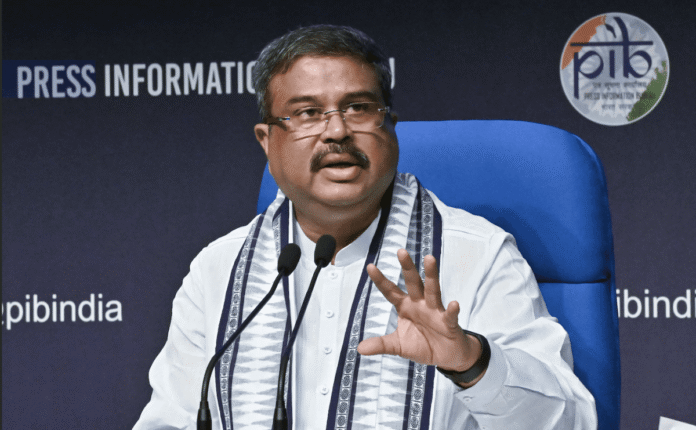
Education plays a central role in national development, economic growth, innovation, and social progress. In India, education policy influences millions of students, teachers, families, colleges, universities, and training institutions. As the country’s education leadership evolves, public attention often focuses on the policies, decisions, and initiatives introduced by the Union Education Minister. Dharmendra Pradhan is a prominent Indian political leader associated with major discussions about educational reform, skill development, digital learning, and improving access to quality education.
The role of education minister dharmendra pradhan is particularly relevant when examining India’s efforts to modernise its education system and prepare students for changing professional opportunities. His work involves policy implementation, coordination with states and educational institutions, and supporting reforms designed to connect classroom learning with practical skills. Understanding his background and priorities helps readers explore how India’s education sector is changing, what opportunities these reforms may create, and which challenges remain important for students and educators.
Who Is Dharmendra Pradhan?
Dharmendra Pradhan is an Indian politician associated with the Bharatiya Janata Party (BJP). Over the course of his political career, he has held several responsibilities in the Union government and has been involved in areas such as petroleum and natural gas, skill development, entrepreneurship, and education. His experience across different government portfolios has shaped his public profile as a political leader working on economic development, workforce preparation, and national policy.
As Union Education Minister, Pradhan has been associated with efforts to implement India’s National Education Policy 2020 and strengthen educational opportunities at different levels. The position requires engagement with school education, higher education, teacher development, academic standards, research, and vocational training. It also involves working with state governments because education in India requires cooperation across different levels of administration. His responsibilities therefore extend beyond announcing policies to supporting implementation, monitoring progress, and addressing concerns raised by institutions, teachers, students, and families.
Early Life and Educational Background
Dharmendra Pradhan was born on 26 June 1969 in Talcher, Odisha. He grew up in a region with a strong connection to industrial development, local communities, and regional politics. His early experiences helped shape his interest in public affairs and student engagement. Before becoming a prominent national political figure, he participated in student politics and developed experience in organisational activities that later supported his political career.
Pradhan pursued postgraduate studies in Anthropology at Utkal University in Odisha. His academic background is relevant to understanding his interest in social structures, communities, and public development. Anthropology examines human societies, cultures, and social relationships, providing a perspective on how people interact with institutions and respond to social change. Although his professional career developed primarily in politics and public administration, his educational experience forms an important part of his personal profile. His journey also illustrates how higher education can support different career paths, including government service, leadership, policy development, and public engagement.
Political Career and Government Responsibilities
Dharmendra Pradhan built his political career through student organisations and the Bharatiya Janata Party. He became involved in student politics through the Akhil Bharatiya Vidyarthi Parishad before taking on broader organisational and electoral responsibilities. He was elected to the Lok Sabha from Deogarh in Odisha in 2004 and subsequently served in the Rajya Sabha. In the 2024 general election, he won the Sambalpur Lok Sabha constituency in Odisha.
His experience in the Union government extends beyond education. He served as Minister of Petroleum and Natural Gas and held responsibilities related to skill development and entrepreneurship. These roles involved policy implementation, public programmes, industry coordination, and workforce development. In July 2021, he became Union Education Minister, a position he held until July 2026. His tenure brought education policy, examination administration, curriculum reform, and institutional development into the centre of his public responsibilities. The official parliamentary profile records his educational qualifications and political background.


Understanding the Role of the Education Minister
The Union Education Minister heads the Ministry of Education and helps guide national policies for school and higher education. The responsibilities include setting policy priorities, supporting educational institutions, improving learning outcomes, and coordinating with state governments. Because India has a large and diverse education system, these responsibilities require attention to regional differences, language diversity, financial resources, and unequal access to educational facilities.
The minister’s work also involves discussions about teacher training, curriculum development, digital learning, research, examinations, and vocational education. However, implementing national reforms requires the participation of state education departments, school administrations, universities, teachers, and other stakeholders. Policies announced at the national level must be adapted to local conditions and supported by appropriate funding and infrastructure. During Pradhan’s tenure, the National Education Policy 2020 was a major focus. Its implementation aimed to make learning more flexible, encourage multidisciplinary study, and improve the connection between education and practical skills.
National Education Policy 2020 and Its Importance
The National Education Policy 2020, commonly called NEP 2020, is a major framework for transforming education in India. It seeks to improve the quality of learning from the foundational years through higher education. Its priorities include conceptual understanding, critical thinking, flexibility in subject choices, vocational exposure, and the development of relevant skills. The policy also encourages education in Indian languages and greater use of technology where appropriate.
During his tenure, Pradhan played a prominent role in promoting the implementation of this policy. One important change is the proposed 5+3+3+4 curricular structure, which organises schooling according to stages of child development rather than following the earlier 10+2 structure alone. The framework emphasises foundational literacy and numeracy, experiential learning, and reduced dependence on rote memorisation.
The policy’s success depends on effective implementation. Schools need trained teachers, suitable learning materials, accessible classrooms, and reliable assessments. Families and students also need clear information about curricular changes. While NEP 2020 establishes broad goals, outcomes depend on how consistently institutions apply its recommendations and whether students from different social and economic backgrounds benefit from them.
Major Education Initiatives Associated With His Tenure
Several national initiatives align with the broader goals of improving access, learning quality, and institutional capacity. Pradhan’s tenure involved promoting reforms and programmes intended to support these objectives.
| Initiative or framework | Main objective | Potential benefit |
|---|---|---|
| National Education Policy 2020 | Modernise the education system | More flexible, holistic learning |
| National Curriculum Framework | Guide curriculum and learning materials | Better alignment with learning outcomes |
| NIPUN Bharat | Strengthen foundational literacy and numeracy | Improved early-grade learning |
| NISHTHA | Support teacher and school-leader training | Stronger classroom practices |
| DIKSHA and digital learning | Provide digital educational resources | Wider access to learning materials |
| Samagra Shiksha | Support school education through an integrated approach | Better coordination and school support |
These programmes serve different purposes, and their results should be assessed separately. For example, foundational literacy programmes focus on early learning, while teacher-training initiatives aim to improve classroom delivery. Digital platforms can help distribute learning resources, but their effectiveness depends on internet access, suitable devices, language options, and teachers’ ability to integrate technology into lessons.
The National Curriculum Framework for School Education was released in 2023 as part of the implementation of NEP 2020. It emphasised developmentally appropriate learning, multidisciplinary education, and a balance between contemporary knowledge and Indian contexts.
Digital Education and Technology in Classrooms
Technology has become an increasingly important part of education. Digital learning platforms can provide students with educational videos, textbooks, practice exercises, and other resources beyond the traditional classroom. They may also help teachers access lesson plans and training materials. These opportunities are especially valuable when educational content is available in multiple languages and can be used on different devices.
During Pradhan’s tenure, digital learning formed part of the broader education reform agenda. However, technology should complement rather than automatically replace effective teaching. Young learners still need interaction, feedback, discussion, and guidance from teachers. Schools in rural and economically disadvantaged communities may face challenges involving electricity, connectivity, device availability, and technical support.
A successful digital education strategy must therefore include accessible content, teacher preparation, student safety, and appropriate assessment methods. Policymakers must also consider students with disabilities and learners who have limited access to digital devices at home. The ultimate objective should be to make learning more accessible and effective, rather than measuring success only by the number of digital platforms introduced.
Higher Education, Research, and Innovation
Higher education is essential for developing skilled professionals, researchers, entrepreneurs, and future leaders. India’s universities and colleges serve students pursuing a wide range of disciplines, including science, technology, medicine, commerce, humanities, and social sciences. Improving the quality of these institutions requires investment in infrastructure, qualified faculty, research facilities, and transparent academic processes.
The education reform agenda associated with Pradhan’s tenure placed importance on multidisciplinary learning and stronger research capacity. NEP 2020 encourages students to explore subjects across traditional academic boundaries and supports a more flexible approach to higher education. Such flexibility may help learners combine technical knowledge with communication, analytical thinking, and problem-solving skills.
Nevertheless, expanding higher education opportunities requires careful attention to affordability, regional access, faculty shortages, and institutional quality. Universities must maintain academic standards while creating opportunities for students from diverse backgrounds. Research development also requires sustained funding, collaboration between institutions, and opportunities for scholars to translate discoveries into practical applications. Educational reforms can create a supportive framework, but long-term progress depends on implementation and measurable outcomes.
Skill Development and Employment Opportunities
Skill development is closely connected to education because students need both academic knowledge and practical capabilities to succeed in a changing economy. Employers increasingly value communication, digital literacy, teamwork, problem-solving, technical expertise, and the ability to learn new skills. Vocational education can help students explore career pathways while still developing a strong educational foundation.
Pradhan’s earlier responsibilities in skill development and entrepreneurship are relevant to this area. His broader policy experience included attention to workforce preparation and the relationship between education and employment. Integrating vocational exposure into education can help students understand different occupations, learn practical techniques, and make more informed career decisions.
Important areas for future development include apprenticeships, industry partnerships, career guidance, recognised qualifications, and training opportunities for people who are already working. Schools and colleges should also explain how vocational courses connect with further study and employment. Effective skill programmes need to respond to actual labour-market needs rather than offering training without clear opportunities to apply the knowledge acquired.
Key Challenges Facing India’s Education System
Despite policy initiatives and technological progress, India’s education system faces significant challenges. Learning outcomes vary between regions and institutions, while some schools experience shortages of teachers, classrooms, laboratories, libraries, and digital facilities. Financial constraints can also make it difficult for students to continue their studies, particularly when families face competing economic pressures.
Examination integrity and student confidence are equally important. High-stakes entrance examinations influence access to professional courses, and concerns about fairness can affect students’ futures. During 2026, allegations concerning NEET-UG examination irregularities contributed to protests and calls for accountability. Pradhan resigned from the Union Council of Ministers on 25 July 2026, and Pralhad Joshi was assigned charge of the Education Ministry. Therefore, Pradhan should be described as a former Union Education Minister, not the current minister.
Other continuing priorities include reducing dropout rates, improving foundational learning, supporting students with disabilities, expanding access to quality higher education, and strengthening teacher development. Addressing these challenges requires transparent administration, effective grievance mechanisms, reliable examination systems, and sustained cooperation between governments and educational institutions.
Why Students and Parents Follow Education Policy
Education policy directly affects the choices available to students and families. Curriculum changes can influence what students study, how they are assessed, and which skills they develop. Changes in entrance examinations, admission procedures, and academic qualifications can also affect preparation strategies and career planning.
Following the work of education policymakers helps families understand the direction of national reforms. Students can learn about the increasing importance of foundational skills, digital literacy, vocational exposure, and multidisciplinary study. Parents can use this knowledge to encourage balanced learning rather than focusing exclusively on examination scores.
At the same time, families should distinguish between a policy announcement and a change that has actually been implemented. Important decisions may require official notifications, state-level action, or institutional guidelines before they affect a particular school or university. Checking the applicable rules is essential when making decisions about admissions, eligibility, examinations, or qualifications.
Key Facts About Dharmendra Pradhan
The following points summarise important aspects of his personal and political background:
-
Full name: Dharmendra Pradhan.
-
Date of birth: 26 June 1969.
-
Birthplace: Talcher, Odisha.
-
Political party: Bharatiya Janata Party.
-
Educational qualification: Postgraduate degree in Anthropology from Utkal University.
-
Parliamentary constituency: Sambalpur, Odisha, in the 2024 Lok Sabha election.
-
Education portfolio: Union Education Minister from July 2021 until July 2026.
-
Major policy focus during his tenure: Implementation of NEP 2020, curriculum development, digital learning, and education reform.
These details provide a concise overview for readers researching his background. His career also demonstrates the connection between student politics, parliamentary responsibilities, and leadership in national policymaking.
Conclusion
Dharmendra Pradhan has played a significant role in India’s education policy discussions, particularly through his tenure as Union Education Minister from 2021 to 2026. His work was closely associated with the implementation of NEP 2020, curriculum reform, digital learning, and efforts to connect education with practical skills. These areas remain important to India’s ambitions for improving learning outcomes, research, employability, and access to quality education.
The subject of education minister dharmendra pradhan is also relevant to understanding the responsibilities and challenges involved in managing a large national education system. Policy goals must be supported by effective implementation, adequate resources, fair examinations, and accountability. Ultimately, educational progress should be judged by whether students receive meaningful learning opportunities and can pursue their future goals with confidence. Although Pradhan no longer holds the education portfolio, the reforms and debates associated with his tenure remain part of the wider discussion about the future of education in India.