


Introduction
The renewable energy sector is becoming an important part of India’s economic and industrial development. With increasing electricity demand, government support for clean energy, and growing awareness of environmental sustainability, companies involved in wind and solar power are receiving considerable attention from investors. Among the established names in this industry, Suzlon Energy has developed a significant presence in the Indian wind energy market. Its manufacturing capabilities, project execution experience, and expanding order book make the company an interesting business to follow.
The Suzlon share price has attracted attention from retail investors, market analysts, and long-term market participants because of the company’s changing financial position and its role in India’s renewable energy transition. However, stock market performance depends on several factors, including quarterly earnings, operating margins, order execution, industry conditions, and overall investor sentiment. Understanding these factors is important before forming an opinion about the company’s market performance.
In November 2026, Suzlon is operating in a market environment that offers considerable opportunities as well as challenges. Its latest quarterly results show revenue growth and stronger project deliveries, while profitability and operating margins require continued attention. Therefore, investors should examine both the company’s recent achievements and the risks that could influence its future performance.
Understanding Suzlon Energy and Its Business Model
Suzlon Energy Limited is an Indian renewable energy company primarily focused on wind energy solutions. Its business activities include manufacturing wind turbine generators, supplying equipment, installing wind power projects, and providing operations and maintenance services. The company works with different categories of customers, including independent power producers, commercial and industrial businesses, and public sector organisations.
Its business model covers several stages of wind energy development. Rather than concentrating exclusively on manufacturing turbines, Suzlon also participates in project development and execution. This broader approach allows the company to serve customers throughout different stages of renewable energy projects. Its maintenance services also provide opportunities for recurring business after turbines become operational.
Suzlon has manufacturing facilities and an established presence in India’s wind energy industry. The company has been working to strengthen its product portfolio and improve project execution capabilities. Its strategy, often described as Suzlon 2.0, focuses on expanding beyond traditional turbine manufacturing towards a more comprehensive renewable energy solutions business.
This transformation is important because the renewable energy market is becoming increasingly competitive. Companies that can provide reliable equipment, efficient installation, technical support, and long-term maintenance may have opportunities to develop stronger customer relationships.
Latest Suzlon Share Price and Market Performance in November 2026
As of November 19, 2026, the stock has been experiencing price fluctuations following its recent financial results and broader market developments. The latest available market information provides useful context for understanding its performance.
According to the available market data, Suzlon Energy closed at approximately ₹36.13 on November 18, 2026, after declining around 2.85% during that trading session. An intraday market update on November 19 showed the stock trading near ₹36.84, although prices can change throughout the trading day.
The stock’s recent performance also highlights the difference between a company’s business growth and its market valuation. Even when a company reports higher revenue or secures new orders, its shares may decline if investors are concerned about profitability, valuation, or future business conditions.
The following table summarises important market and business information available in November 2026.
| Particulars | Latest available information |
|---|---|
| Closing price on November 18, 2026 | ₹36.13 |
| Intraday price reported November 19 | Around ₹36.84 |
| 52-week high | ₹60.45 |
| 52-week low | ₹33.15 |
| Q2 FY27 revenue | ₹4,869 crore |
| Q2 FY27 net profit | ₹394 crore |
| Order book | More than 6 GW |
| Manufacturing capacity | 4,500 MW |
Market figures are based on the cited November 2026 reports. Intraday prices are indicative and may change. Financial figures are consolidated company-reported results.
The difference between the stock’s 52-week high and recent trading levels indicates that the share has experienced a substantial correction. Such movements can create opportunities for investors who believe in the company’s long-term prospects, but they can also indicate uncertainty about near-term performance.
Latest Quarterly Financial Results of Suzlon Energy
Quarterly financial performance is one of the most important factors when evaluating a listed company. Suzlon’s second-quarter FY27 results, announced on October 29, 2026, provide an updated picture of its operating activities and financial position.
The company reported consolidated revenue from operations of approximately ₹4,869 crore in Q2 FY27, compared with ₹3,866 crore in the corresponding quarter of the previous financial year. This represents year-on-year growth of approximately 26%. The improvement reflects stronger business activity and higher deliveries during the reporting period.
However, reported net profit requires a closer examination. Suzlon recorded consolidated net profit of approximately ₹394 crore during the quarter, compared with ₹1,279 crore in Q2 FY26. The previous year’s figure included an exceptional deferred tax asset benefit of approximately ₹891 crore. When this benefit is excluded, the comparable previous-year profit was approximately ₹389 crore. On that adjusted basis, the latest quarterly profit increased by around 1.3%.
This distinction is important because comparing reported profits without considering exceptional accounting adjustments can create a misleading impression of business performance. Investors should examine revenue, operating profitability, cash generation, and adjusted earnings together rather than relying on a single financial figure.
Revenue Growth and Operating Margins
Revenue growth suggests that Suzlon is increasing its business activity. Nevertheless, higher revenue does not automatically translate into stronger profitability. Manufacturing expenses, raw material prices, project execution costs, employee expenses, and currency fluctuations can affect the company’s operating margins.
During Q2 FY27, the company reported EBITDA of approximately ₹720 crore, compared with ₹721 crore in the corresponding quarter of the previous year. Its EBITDA margin declined to approximately 14.8% from 18.6%. This indicates that although revenue increased considerably, profitability relative to revenue remained under pressure.
Management has also revised its FY27 operating margin guidance to approximately 15%, compared with its earlier projection of 17%. Unfavourable project mix, commodity costs, and foreign exchange movements have contributed to the pressure.
For investors, margin improvement will be an important factor to monitor in upcoming quarters.
Order Book and Future Business Opportunities
An important factor supporting Suzlon’s business outlook is its strong order book. An order book represents projects or equipment orders that a company has secured but has not yet fully executed. It provides an indication of potential future business activity, although actual revenue depends on timely deliveries, project commissioning, and customer payments.
According to the company’s Q2 FY27 announcement, Suzlon had an order book exceeding 6 GW, while its first-half order intake crossed 1.5 GW. The company also reported record deliveries during the first half of FY27. These figures demonstrate that demand for its wind energy solutions remains significant.
The order book is particularly important because wind energy projects generally involve several stages, including planning, equipment manufacturing, transportation, installation, and commissioning. Delays at any stage can affect the timing of revenue recognition and cash flows. Therefore, investors should look beyond the headline order book figure and examine how efficiently Suzlon converts orders into completed projects.
Another interesting development is the company’s growing focus on engineering, procurement, and construction activities. Its EPC share of the order book reached approximately 38%, with a strategic target of increasing this proportion to 50% by FY28. This approach could allow Suzlon to participate in a larger portion of the project value chain.
Manufacturing Capacity and Technological Development
Suzlon has domestic wind turbine manufacturing capacity of approximately 4,500 MW across 15 specialised facilities. Manufacturing capacity is important because the company needs sufficient production capabilities to meet increasing customer demand without creating unnecessary delivery delays.
The company is also developing higher-capacity turbine technologies to improve energy generation efficiency. Its newer turbine platforms are designed to serve different wind conditions and project requirements. Better turbine performance can make wind energy projects more commercially attractive by improving electricity generation over their operating life.
During its latest quarterly update, Suzlon highlighted the development of its S175 5 MW turbine platform and progress in its technology portfolio. Such developments may help the company compete for larger projects and strengthen its position in the renewable energy market.
However, technology development requires investment, testing, operational reliability, and successful customer adoption. The long-term benefits will depend on whether new products can be manufactured economically and delivered consistently.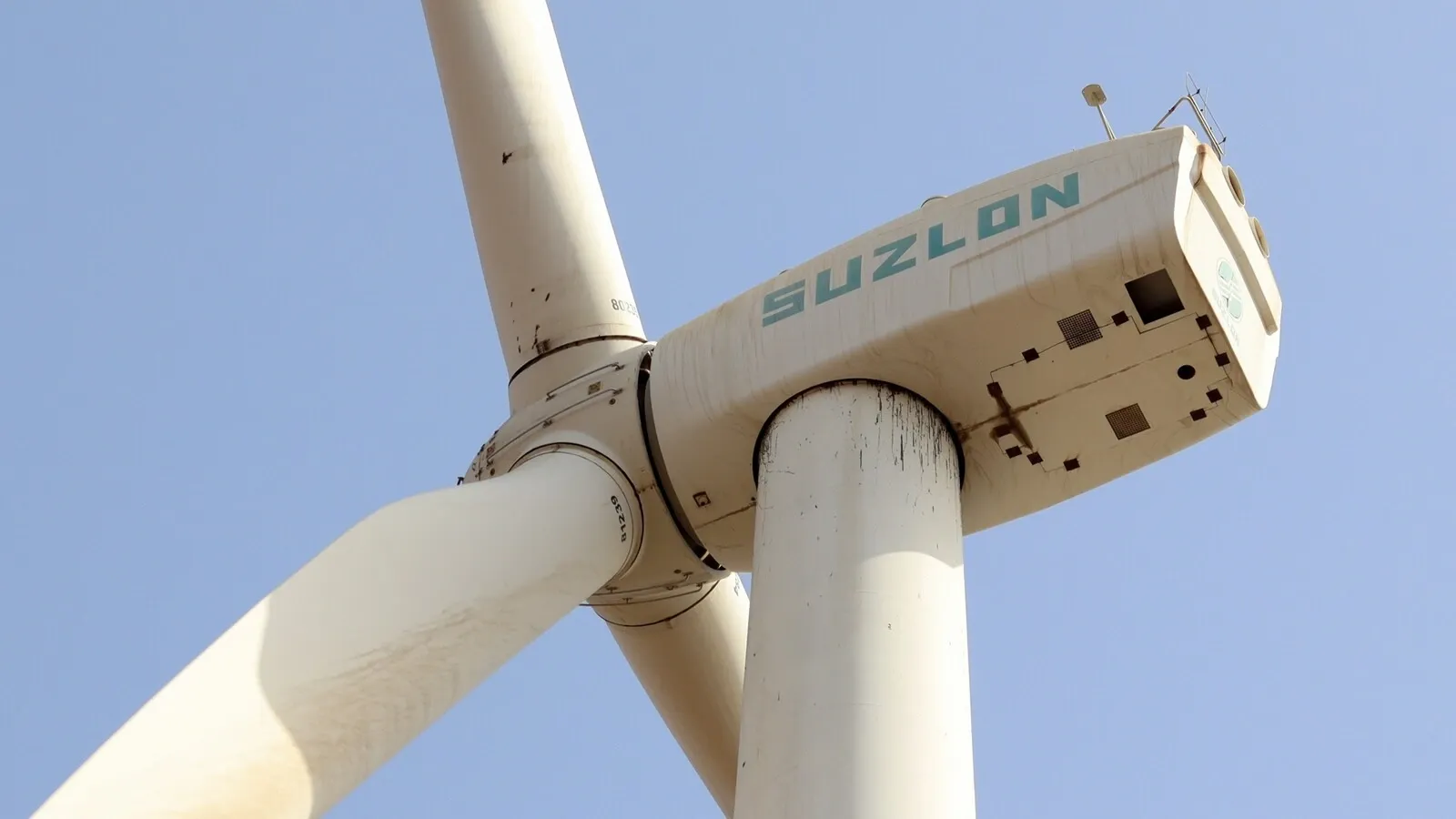
Factors That Could Influence Suzlon’s Stock Performance
The stock market evaluates companies based on both current financial performance and expectations about future growth. In Suzlon’s case, several business and economic factors may influence investor sentiment over the coming quarters.
1. Government Renewable Energy Policies
Government policies play an important role in the development of India’s renewable energy industry. Initiatives encouraging clean electricity generation, infrastructure investment, and domestic manufacturing can support demand for wind energy equipment.
India’s long-term renewable energy ambitions may create opportunities for established wind turbine manufacturers. However, policy implementation, project approvals, transmission infrastructure, and financing availability will determine how quickly these opportunities become actual business.
2. Electricity Demand and Industrial Expansion
India’s electricity requirements are increasing because of urbanisation, industrial development, infrastructure projects, and changing consumption patterns. Businesses are also exploring renewable electricity to manage energy expenses and meet sustainability objectives.
Commercial and industrial customers may become an important source of demand for wind energy projects. Suzlon’s growing engagement with these customers could support its business development if projects move successfully from planning to execution.
3. Competition in the Renewable Energy Industry
The renewable energy industry includes several domestic and international participants. Competition can influence equipment prices, project margins, technology investments, and customer relationships.
Suzlon needs to maintain product reliability, manufacturing efficiency, and timely project execution to remain competitive. Strong demand alone cannot guarantee profitability if companies are forced to accept lower margins to secure new orders.
4. Financial Performance and Cash Flow
Revenue and profit growth are important, but cash flow also deserves attention. Large renewable energy projects require working capital for manufacturing, transportation, installation, and other operational activities.
Investors should examine whether the company is generating sufficient operating cash to support expansion and manage its financial commitments. Improvements in working capital management can strengthen the company’s ability to execute projects without excessive financial pressure.
Important Risks Investors Should Understand
Although Suzlon operates in a promising industry, investors should not ignore the risks associated with the business. Renewable energy companies are exposed to changes in commodity prices, financing conditions, project execution schedules, and government regulations.
One major risk is the possibility of project delays. Wind energy installations depend on land availability, transportation arrangements, grid connectivity, environmental approvals, and customer readiness. Even when a company has secured an order, delays in commissioning can affect the timing of revenue and cash collection.
Another concern is operating margin pressure. Suzlon’s latest results show that revenue growth has not translated into equivalent EBITDA growth. If manufacturing expenses or project costs remain elevated, profitability could face further challenges. Currency fluctuations may also affect costs associated with imported components and international business activities.
Stock valuation is another important consideration. A company can have strong long-term business opportunities while its shares remain vulnerable to market corrections. Investors should compare its valuation with earnings, cash generation, growth expectations, and industry competitors.
Some important factors to monitor include:
-
Quarterly revenue, EBITDA, and net profit growth.
-
Order book additions and project commissioning progress.
-
Operating margins and working capital requirements.
-
Debt position, cash flow, and competitive developments.
These indicators can provide a more balanced understanding of the company’s financial condition than daily share price movements alone.
Long-Term Growth Potential of Suzlon Energy
India’s renewable energy transition provides a significant business opportunity for companies operating in the wind power industry. Wind energy can complement solar power because electricity generation patterns differ depending on weather conditions and geographical locations. Combining different renewable energy sources can help improve the reliability of electricity supply.
Suzlon’s experience in wind turbine manufacturing and project execution gives it an established position in this developing industry. Its efforts to expand manufacturing capabilities, introduce new turbine technologies, and increase participation in EPC projects could support future business growth.
The company’s DevCo-led business strategy is another development worth following. During the first half of FY27, DevCo-led orders accounted for more than 70% of its order intake, representing over 1.1 GW. This approach is intended to strengthen its role in project development and improve its participation across the renewable energy value chain.
Nevertheless, long-term growth depends on successful execution. Manufacturing capacity must translate into actual deliveries, orders must become operational projects, and revenue growth must eventually support sustainable earnings. If the company can improve margins while maintaining a healthy order pipeline, its business fundamentals may become stronger over time.
What Should Investors Watch in the Coming Quarters?
The coming quarters will be important for understanding whether Suzlon can maintain its revenue growth while improving profitability. Its Q2 FY27 performance showed strong revenue expansion, but the decline in EBITDA margin highlights the need for better cost management. Investors should pay particular attention to management commentary about operating expenses, project execution, and future business expectations.
The commissioning pipeline is another important indicator. During its Q2 FY27 earnings update, Suzlon reported that more than 1.25 GW of erected turbines were awaiting commissioning. Successful completion of these projects could support future business activity. However, the speed of commissioning and the company’s ability to manage operational requirements will determine how effectively this pipeline contributes to financial performance.
Investors should also observe developments in the company’s credit profile, manufacturing operations, and customer relationships. Suzlon announced that CRISIL upgraded its long-term credit rating to AA-/Stable in October 2026. Such developments provide additional information about its financial standing, although credit ratings should not be treated as guarantees of future stock performance.
A Practical Approach to Investment Decisions
Instead of making investment decisions based entirely on short-term price movements, investors can evaluate the company through a combination of financial and operational indicators. Comparing several quarters can reveal whether business improvements are consistent or temporary.
It is also important to distinguish between short-term trading and long-term investing. Traders may focus on price movements, trading volumes, technical indicators, and market sentiment. Long-term investors generally give greater importance to business performance, financial stability, competitive advantages, and future growth opportunities.
A disciplined approach can help investors avoid emotional decisions during periods of market volatility. Diversification and appropriate risk management are equally important, particularly when investing in individual stocks from sectors that experience rapid changes in market expectations.
Conclusion
Suzlon Energy remains an important participant in India’s wind energy industry, with established manufacturing capabilities, an expanding order book, and opportunities arising from the country’s renewable energy transition. Its Q2 FY27 results demonstrate encouraging revenue growth and stronger deliveries, while operating margin pressure remains an important issue that investors should monitor.
The Suzlon share price has experienced considerable volatility in 2026, reflecting changing market expectations and concerns about financial performance. Its recent correction highlights why investors should examine business fundamentals instead of assuming that strong industry demand will automatically lead to rising stock prices.
Going forward, order execution, commissioning progress, profitability, cash flow management, and technological development will play important roles in determining the company’s financial performance. Its long-term prospects could benefit from increasing demand for wind energy, but competition, project delays, and cost pressures remain relevant challenges.