

For thousands of years, across cultures and continents, people have turned to fragrance as a way to invite positive energy into their lives. In Indian homes, the ritual of lighting incense before prayer, before starting a new venture, or simply at the beginning of each day is not just a tradition. It is an intention. And that intention, when paired with the right fragrance, can genuinely shift the energy of a space.
If you have been curious about good luck incense and what role it plays in attracting abundance, clarity, and positive outcomes, this guide is for you. We will walk through the fragrances most associated with prosperity, how to use them, and why the quality of the incense you choose matters just as much as the fragrance itself.
Why People Use Incense for Good Luck
The connection between incense for good luck and spiritual practice runs deep in India. Fragrances like sandalwood, rose, and loban have been used in temples and homes alike — not just for their pleasant smell, but because certain plant-based aromas have long been believed to clear negative energy, purify spaces, and create the right conditions for abundance to flow.
Modern science adds something to this too. Aromatherapy research suggests that certain scents genuinely influence mood, reduce cortisol levels, and promote the kind of calm, focused mindset that naturally leads to better decisions and more productive energy. Whether you approach this spiritually or practically, the principle holds: a calm, clear space supports a calm, clear mind. And a calm, clear mind is where good things tend to begin.
In Vastu Shastra and Feng Shui traditions alike, fragrance is treated as an active force. Certain aromas are said to activate specific directions in the home, clear stagnant energy, and invite in what practitioners call “auspicious vibrations.” Burning incense sticks for good luck in the northeast corner of a home, for instance, is a Vastu recommendation many families follow to this day.
The Best Incense Sticks for Good Luck: Fragrances That Work
Not all fragrances carry the same association with prosperity and positive energy. Here are the most widely recommended ones, and what each is traditionally believed to invite.
1. Sandalwood
Sandalwood is perhaps the most universally respected fragrance in Indian spiritual tradition. It is offered in temples, used in meditation, and believed to purify the environment while calming the mind. For good luck and prosperity, sandalwood creates a steady, grounding atmosphere — one that supports clear thinking and helps remove mental obstacles before important decisions or beginnings.
2. Rose
Rose fragrance is associated with love, harmony, and positive relationships. In terms of good fortune, rose incense is particularly recommended for matters of the home — family harmony, welcoming guests, and maintaining warmth in close relationships. A harmonious home, in many traditions, is considered the foundation of all other abundance.
3. Loban (Benzoin Resin)
Loban has deep roots in Indian and Arabic purification rituals. It is one of the oldest incenses used specifically to ward off negative energy and invite divine blessings. Burning incense for good luck during new beginnings — a new business, a new home, a new year — often centres around loban because of its strong purifying and protective properties.
4. Mogra (Jasmine)
Mogra or jasmine fragrance is associated with positivity, optimism, and the kind of light energy that attracts good opportunities. In many South and West Indian traditions, mogra is used specifically during auspicious occasions and celebrations. Its uplifting quality makes it ideal for mornings — setting the tone for a day you want to go well.
5. Guggal
Guggal is a resin used in havan rituals and is deeply associated with spiritual protection and divine favour. It is one of the traditional fragrances burned specifically to invite blessings and cleanse the home of obstacles. For those seeking incense for good luck in a more traditional, ritualistic sense, guggal is deeply rooted in this intention.
6. Lemongrass
If sandalwood grounds and rose harmonises, lemongrass clarifies. It is a fragrance associated with mental freshness, new beginnings, and cutting through confusion. Before making important decisions — a new investment, a business launch, a creative project — lemongrass incense creates the mental environment where good judgment and positive outcomes are more likely to follow.
How to Use Good Luck Incense Correctly
Choosing the right incense sticks for good luck is one part of the practice. Using them intentionally is the other.
Set an intention before you light it. This is not mysticism — it is simply focus. Taking ten seconds to be clear on what you are inviting — calm, clarity, prosperity, harmony — makes the ritual meaningful rather than mechanical.
Choose a clean, uncluttered space. Vastu and Feng Shui both emphasise that fragrance cannot do much in a chaotic environment. A tidy space allows the fragrance to move freely and the atmosphere to shift.
Light one stick at a time. More smoke does not mean more good luck. One quality stick from a natural, charcoal-free range creates a more subtle, pleasant atmosphere than three synthetic sticks burning together.
Allow the fragrance to reach the whole room. Let the smoke drift naturally rather than placing the incense holder directly beneath a fan or in a draft. Give the fragrance three to five minutes to settle into the space.
Make it a daily ritual. The real power of burning incense for good luck is not in a single dramatic gesture. It is in the consistency of the practice — a daily moment of intention that, over time, creates an environment and a mindset genuinely oriented toward positive outcomes.
Why the Quality of the Incense Matters
Here is something most incense guides do not tell you: a significant proportion of incense sticks sold in India today are made with charcoal, synthetic fragrance oils, and chemical binders. These sticks often smell strong initially, then turn sharp or suffocating. They produce dense smoke that irritates the eyes and lungs and can cause headaches in closed rooms.
This matters for two reasons. First, it affects your health. Second — and more relevant to this discussion — a headache is the opposite of the calm, clear, positive state you are trying to create.
The best incense sticks for good luck are ones made from natural, plant-based materials: wood powders, flower powders, organic herbs, natural resins, and essential oils. These burn lighter, smell truer, and create the kind of clean, fragrant atmosphere that actually supports the intention behind the ritual.
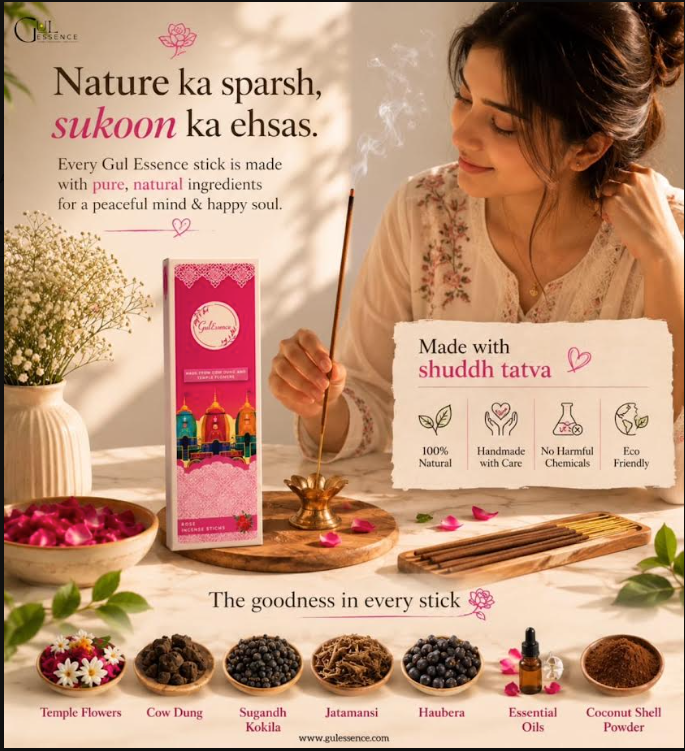
At Gulessence (www.gulessence.com), every incense stick is charcoal-free and made from recycled temple flowers, organic herbs, cow dung, and pure essential oils — handcrafted by a women-led team in Jaipur. The result is incense that honours the ritual rather than just going through the motions of it.
Frequently Asked Questions
Q1. Which is the best incense for good luck in Hindu tradition?
Sandalwood, loban, and guggal are the three most widely used fragrances for inviting positive energy and divine blessings in Hindu ritual tradition. Rose and mogra are also considered auspicious, particularly for matters of home and relationships.
Q2. Does burning incense for good luck actually work?
Whether you approach it spiritually or psychologically, the practice creates a positive effect. Rituals of intention — taking a moment to focus, to create a calm environment, to mark a beginning — are associated with better outcomes. Fragrance is a proven mood-influencer, and the right scent genuinely creates a more settled, focused state of mind.
Q3. How often should I burn good luck incense?
Daily use, even if brief (one stick, one intention), is considered more effective than occasional burning. Morning or evening, aligned with your natural ritual time, is ideal.
Q4. Is charcoal-free incense better for spiritual use?
Many practitioners prefer it specifically because the cleaner burn feels more aligned with the purity of the ritual. Natural ingredients also tend to smell more true-to-source — real sandalwood rather than a synthetic approximation — which is meaningful when the fragrance itself carries spiritual significance.
Q5. Where can I buy natural good luck incense sticks in India?
Gulessence (www.gulessence.com) offers a range of charcoal-free, flower-based incense sticks including sandalwood, rose, mogra, loban, and guggal — available online across India with doorstep delivery.
Q6. Can I burn incense for good luck every day?
Yes — and daily practice is recommended. Use one stick at a time, ensure some ventilation in the room, and pair it with a clear intention. Quality natural incense used daily is gentle enough for regular use without causing irritation.
Gulessence is a Jaipur-based brand crafting charcoal-free incense, dhoop sticks, havan cups, and ritual wellness products from recycled temple flowers and organic ingredients. Explore the full range at www.gulessence.com.